
How Creation Care Becomes a Lifestyle
Opinion piece by Karen Achieng, Volunteer
As a Christian, I’ve learnt that the world is God’s creation all through my childhood. It was something I sang in Sunday school, a fact I kept at the back of my head and could blurt out when called upon.
Growing up in a developing neighbourhood meant that the greenery was steadily cleared over time to make way for apartments. It became something so common that I thought nothing of it.
When the term conservation was brought up in the news or in my studies, it felt like something foreign. The kind of activity done in some far-off forest, the savanna or the ocean. My interactions with the beauty of nature were limited to the David Attenborough documentaries that aired on TV or school trips to the National Animal Orphanage.
I believed that God was the creator of everything around me. I believed that it should be conserved and yet that knowledge hadn’t translated into action. Until I came across A Rocha Kenya and my view was fundamentally changed.

What changed
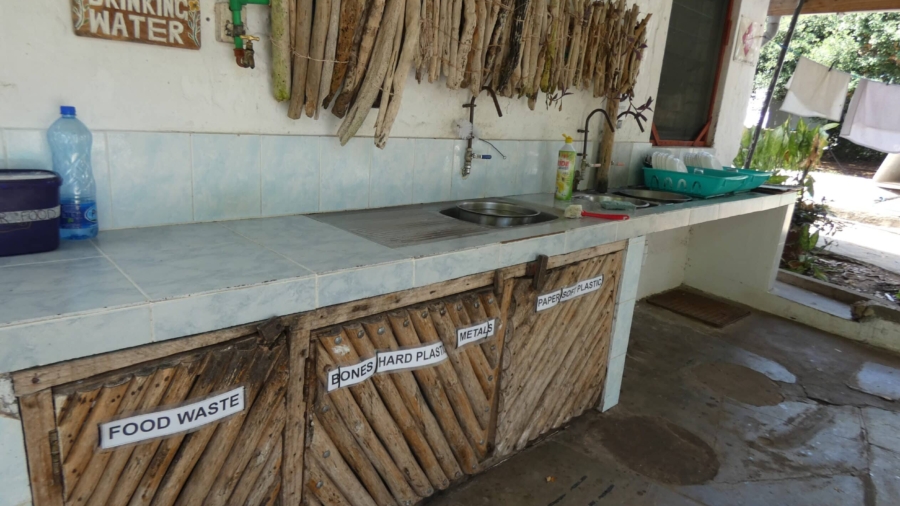
When I arrived at the Mwamba Field Study Centre, I was ready to see the grand things that A Rocha Kenya had been a part of. Instead, it was the simple dish washing station that completely blew my expectations away.
The area was organised to make the most out of all the water and minimize wastage. The waste system was made to make recycling easier. From food scraps, tea bags, and coffee grounds to soft and hard plastic, they all had separate bins.
While I had of course encountered some of these in the busy streets of Nairobi, what made this truly fascinating to me at Mwamba was the culture. Everyone from first-time guests to the staff followed the system diligently. It had become such an ingrained habit that it was done automatically without pause.
Standing by that station, I thought of Genesis 2:15 where God puts man in the garden of Eden “to work and take care of it”. Taking care of creation requires putting in the work. It takes intentionality to pause after every meal, sort your waste, and consciously save water while doing a simple task like washing a plate. Conservation isn’t just about saving endangered species in the wild; it begins in ordinary everyday tasks right where we live.

Making it a lifestyle
Before coming to A Rocha, I naively believed that practicing creation care was reserved for scientists, environmental scholars or rich people. Because I wasn’t in those spaces, I assumed that it wasn’t my responsibility. Yet it is in the little things that we can steadily impact the environment around us. Our small actions do matter and should not be looked down upon.
Making creation care a lifestyle could be as simple as cutting back on single-use plastics, being intentional about sorting waste or conserving water and energy. It is also about using our voices in our various spaces that helps others become conscious and aware.
Local churches and neighbourhoods can expand this by cutting back on single-use plastics during fellowships. They can also take it a step further by organising community clean-ups or planting native trees together. Real change begins when we as individuals choose to pause and reflect on how we can be better stewards of the world.
I guess what I am trying to say is...
We were not put on this Earth to be passive bystanders, but to be active guardians tasked with conserving it. Ignoring the health of our environment isn’t a neutral stance; it is a quiet disregard for the wonderful world that was entrusted to us. As believers, this is a call to intentionally think about the impact of our choices on the environment.
So, look outside your home, your neighbourhood and your church today. Is there something you can do to work and take care of the earth that the Lord has made? And more importantly, will you do anything about it?