


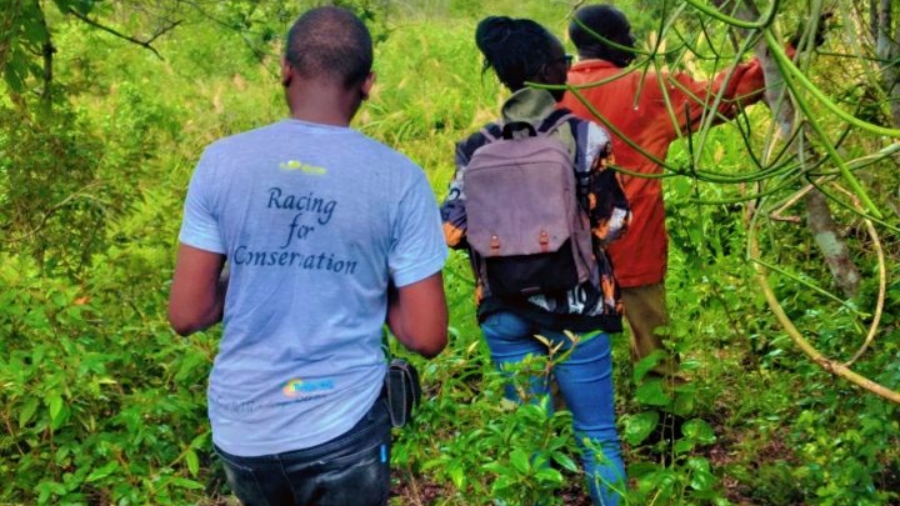












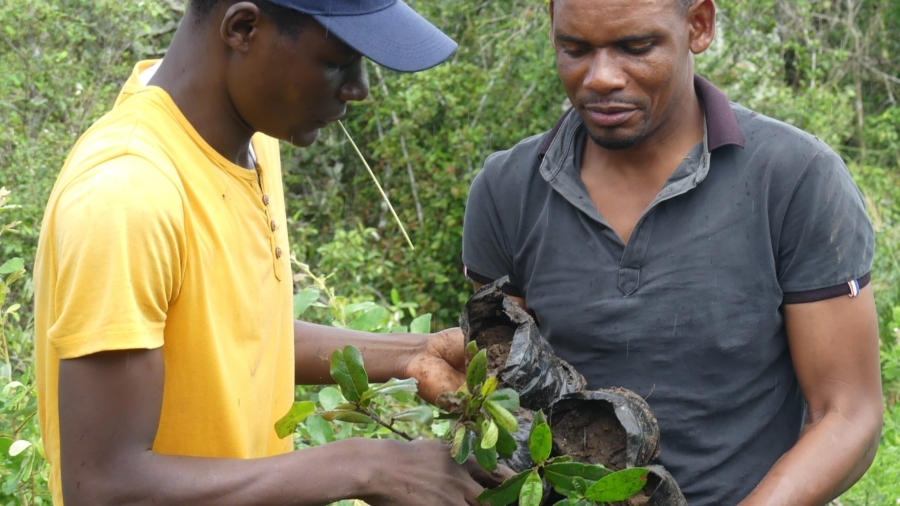


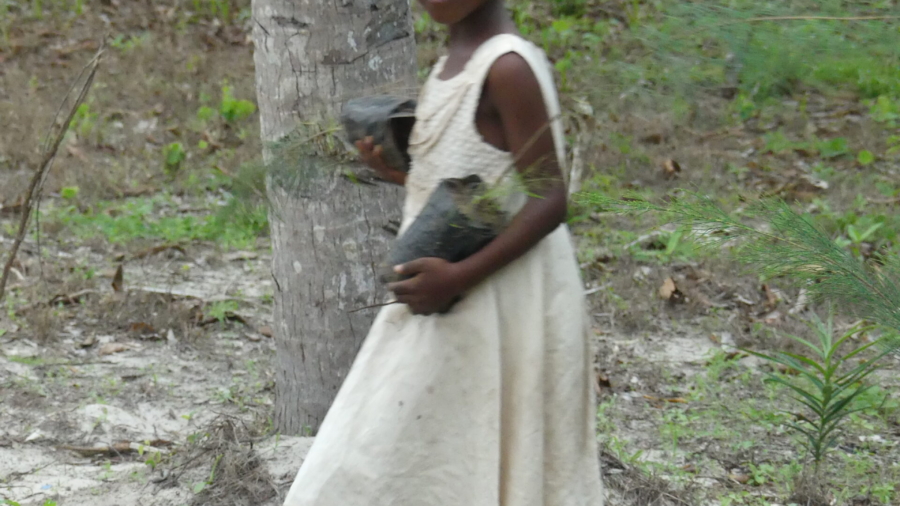
On Monday a group 5 of A Rocha Kenya volunteers, were able to help with tree planting in a local village. Tree planting is one of the conservation measures through which ASSETS (Arabuko-Sokoke Schools and Eco-Tourism Scheme) works with the local community to make them less depended on the forest. The idea being that if the community members have their own trees, they can sell or cut for timber or charcoal without having to go into the forest.

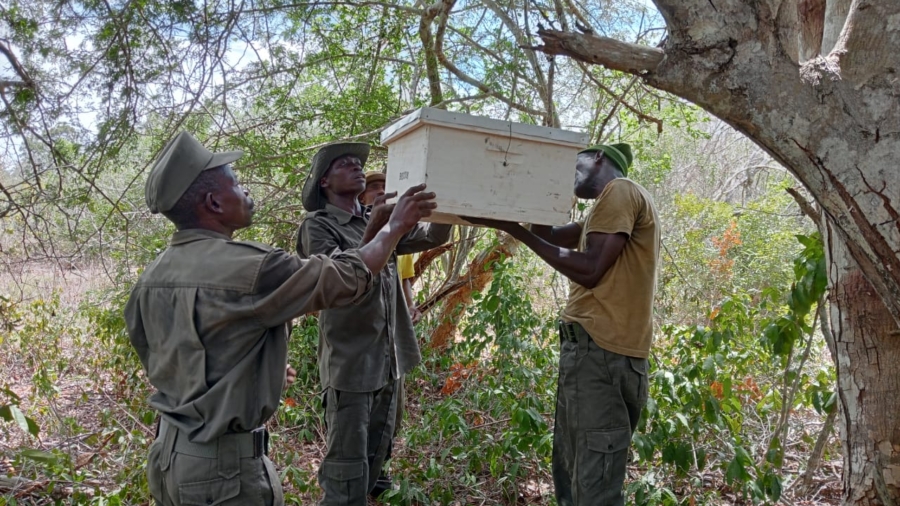
Families engaged primarily are those of ASSETS beneficiaries. We arrived at the households and headed round the back of their property to the area where the trees were going to be planted. Using string that was pulled tight across an area of land, we dug holes for the saplings at 2metre intervals. The Casuarina sapling could then be placed into the ground, and with care, the hole filed in with soil. A basin was left at the base of each tree for rain to pool from the nearby ground and provide prolonged saturation for the roots. In total as a group, we planted just over 170 trees!

The rainy season starts in April here in Kenya, so it is this time of the year that there is a bigger push to put trees in the ground. In the hope that they will become well enough established before the water becomes more scarce.
Our aim as ASSETS has always been to reduce the pressure exerted on Arabuko-Sokoke Forest and the Mida-Creek, and in so doing, care for God’s beautiful creation. One of the best ways of doing this, that has been tested over the years, is helping the neighboring community to be more equipped and be able to rely on themselves. If they can go about their daily lives without having to cut down trees or hunt animals in the forest, then there is hope for the forest.

After the planting was completed, the volunteers got a chance to share with the community and they were all very praising of ASSETS and the potential it has to provide benefit to local people. Nathan a new A Rocha Kenya volunteer was excited to get stuck in and had this to say…
“Getting to visit a family living in smaller village was such a privilege and I truly enjoyed getting dirty in the soil, digging holes and planting trees. What I took from this experience the most though was learning how beneficial a few simple trees can be to a family. I learnt that not only can tree planting contribute towards a healthier environment, but also be a source of income for people too, brilliant! Plus, an added benefit was the building of friendships and community that resulted from our great teamwork!

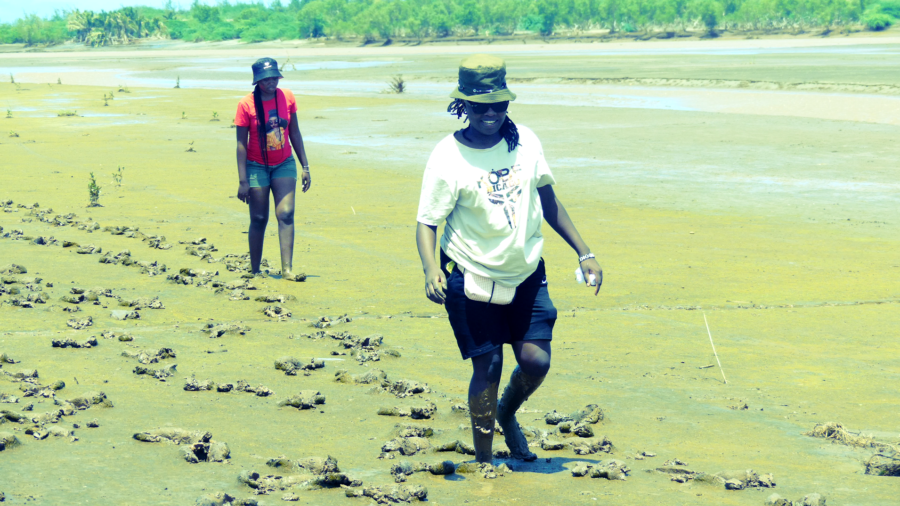
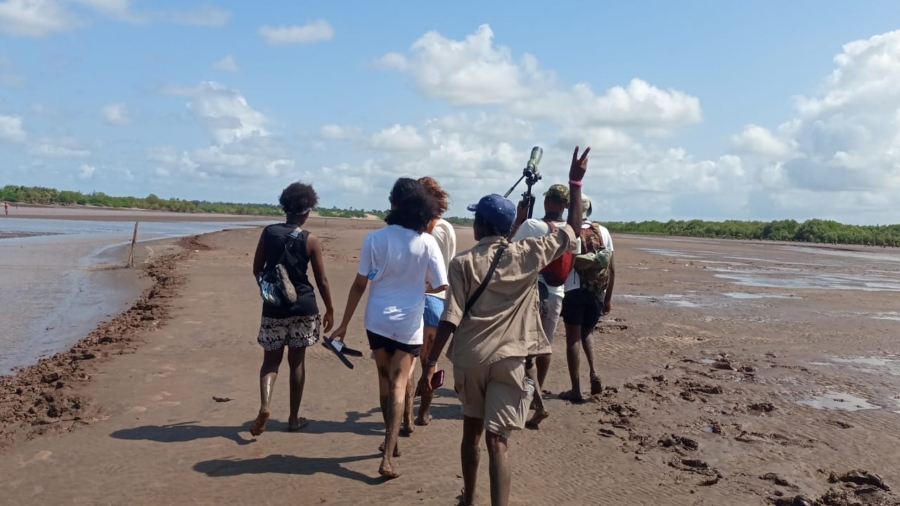
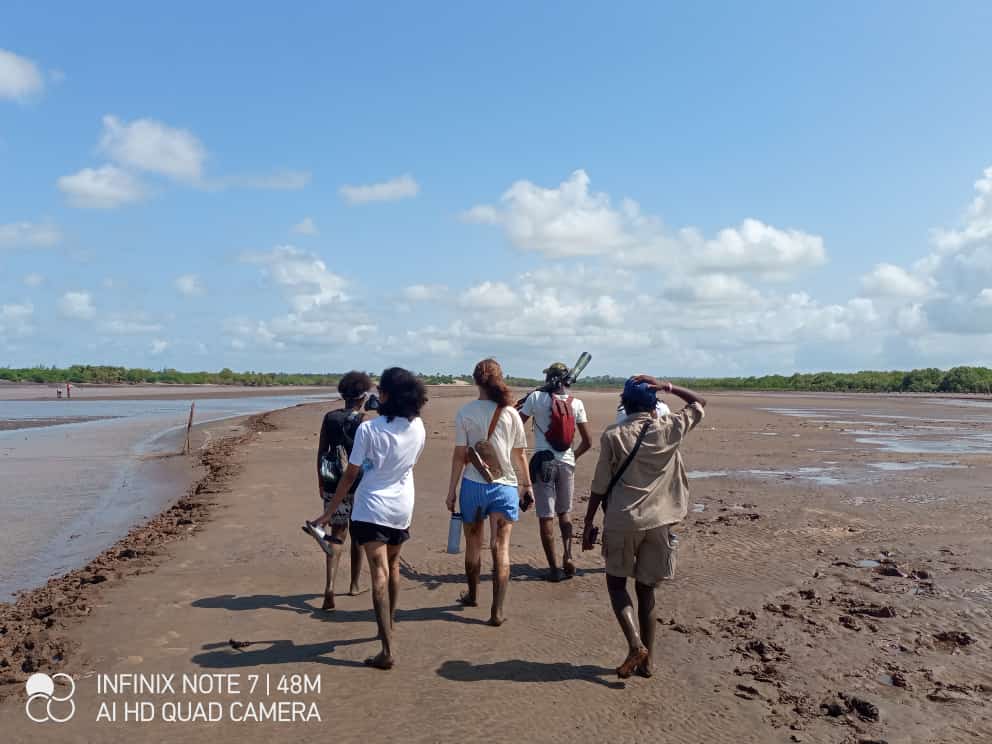
Last weekend, our science team together with a few volunteers went for the monthly Sabaki bird count. To make the activity even more interesting and fruitful, they went there the night before and camped on site. Faith, a volunteer in the communications department was happy to join them, and this is what she had to say…
“During my time at A Rocha Kenya, I have heard many interesting stories about the Sabaki bird counts, or the muddy counts, as it is often called. That is why when the opportunity to not only join the count but get to camp as well presented itself, I couldn’t say no. We arrived at Sabaki at around 4pm, where we met members of the Sabaki River Conservation and Development Organization ( SARICODO). They were our hosts, but also would later join us for the counts. We then headed to our camping site where we pitched our tents and spend the rest of the evening.

Our morning started quite early. We started with a bird walk around the area. In the process, we also got to identify some interesting species and learnt about some of the tree species around. Some of the bird species in our bird watching included the Red –cheeked Cordon-bleu, African palm swift and Namaqua dove. We also saw the Speckled mousebird ,Scaly-throated honeyguide ,Africa pied wagtail, Village weaver and the Fork-tailed drongo.

At about quarter past seven, we went back to our camping site and made breakfast. We really had a scarcity of water in the area so the little we could get was only used for cooking and drinking.
The Sabaki water counts started half past nine. We used a different route because of the rains, the usual route was flooded and thus very hard to access. Because of the floods, we had a lot of dirty water in the ocean from the river.

Most of the water birds had migrated and so we did not count a lot of birds as usual. The count did live up to its legend. The fun part was walking through the mud on the banks, and also watching out for the hippos in the river.

The highlight of the day was the White-winged Black Tern, the species was in the molting period and as a result looked very pretty. Other species that were counted included the African sacred ibis, Common greenshank, Caspian tern, Lesser flamingos, Terek Sandpiper, Swift tern, Lesser crested tern, Grey plover, Little stint and White-fronted plover.

We were done by our counts at around noon, where we all gathered at our camping site, broke camp and cleared, ready to go back to Mwamba. I really had a very interesting day and a unique experience. What I thought the Sabaki counts would be like was great, but what I experienced was even greater. And even though there wasn’t the usual mud, maybe because we used a different route, the muddy count did live up to its legend!”